The craft of the actor and the art of comedy — Interview with Gianfranco D’Angelo
The voice of this interview
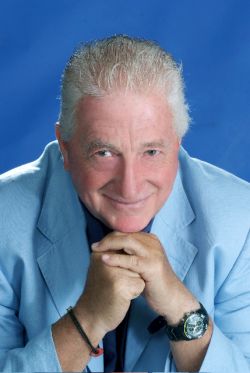
Gianfranco D’Angelo
- Profession
- Actor and comedian
- Country of origin
- Rome, Lazio, Italy
Gianfranco D’Angelo, actor and comedian, is at the heart of this conversation on the theme: the craft of the actor and the art of comedy. The dialogue retraces experiences, choices and reflections that emerged during the interview, leaving room for the guest’s voice.
When did your artistic career begin? What is the world of theatre television for you?
D’Angelo: “My first recitation I made it in 1963 at the theatre of the Arts in Rome only one day, but in fact my artistic career began in 1965 at the TEATRO IL CORDINO, built by me by some of my brotherly friends, in the heart of Trastevere, with the texts of Maurizio Costanzo.
Television has been part of our lives for about half a century, builds images and contributes to the knowledge of the distant world. In recent decades, television has lost its main functions and quality, in favour of audiences. As for me, television remains the most powerful mass media most popular. The TV gave me the popularity that then helped me do the theater.
The theater is my great love. Silvio D’Amico has defined it: < THE COMMUNITY OF A PUBLIC WITH A VIVENT EXPENDITURE > > > . The theater is different from the films or images of the TV projected above on a screen, always identical, unalterable, insensitive to the presence of those who will see them. The theater wants the living actor who speaks that acts warming up to the reaction of the public”.
We all know that it was the great slaughterer of the famous television program of the 80s “Drive In” plated Antonio Ricci on Channel 5. What was for her the world of “Drive In” and television of those years?
D’Angelo: “ Drive-in was the most representative comic transmission of the 80s. The speed of scene changes, very fast gags, scratching monologues. The state television of those years was a tired, ancient television, especially the variety. For me it was the most beautiful and fun time. We had a great deal between ourselves, we were almost always all together, we had fun playing jokes. Unfortunately the world of Drive In today is only a nice memory of the '80s".
“The theatre is grateful to the artists (like our Gianfranco D’Angelo) and to the public because they are the real pillars of this form of communication, love, affection and emotions and laughter towards the positive world”
But do you feel more like a comedian or a dramatic actor?
D’Angelo: I feel like an actor. As in the field of medicine there are specializations, I chose that comedy in my field. But that doesn't mean an actor can't play dramatic roles. I had the same success with the comedy “ Guess who comes to dinner.” The main thing for an actor is to assume a consistent look with the character he plays to make it credible to the spectators.”
In the work of the comic actor, what is the relationship between the ideation of the character and the writing of the playwright?
D’Angelo: “The actor’s craft is the oldest in the world dating back to 530 BC. The comedy I think is born with Plauto, his comedies are still acting today I have interpreted more than one. As for the actor’s tune with the dramaturgy, I think it is necessary to enhance a work.”
“The theater wants the living actor who speaks that acts warming up to the reaction of the public”
The Pirandellian theatre is based on the poetics of humor (<>); it (the poetics of humor) has made a distinction between person/character (mask), stating that the character is the mask that recites the part dictated by society and that produces the verosimile. His theatre (ironically we call it the Anglican theatre) is combined with the poetics of humor of the Pirandellian theatre? [GROANS]
D’Angelo: “Pirandello takes the example of an old lady who dyes her hair and embossedly wears herself as a young woman. The first reaction in seeing her is to laugh seeing the comic side of the situation because the old is the opposite of what should be at her age. Then the old lady intervenes, she discovers that that way of making up is just fear of old age and she thinks she's getting away from her dressing like that. This is the moment of the “sense of the contrary”.
In the various characters that I interpreted at Drive, we say that they were slightly approaching the poetics of the pyrandellian humor, which would be more right to call in my case, as suggested in the question, humor “D’Angeliano”.
Who would like to thank for his personal career? What advice can you give young students like me to achieve your artistic career? Now what are your future projects?
D’Angelo: “I would like to thank all the people who have been close to me with affection and encouraged me in difficult times to move forward. The advice that I can give to young people who want to pursue this career is to ask themselves a simple question: “Do I really feel like I’m being an actress? “If you are sure of this, you have to make yourself a basic culture to know all about the theater the cinema and television of yesterday and today.
Then attend a good laboratory for the diction the recitation of gestures. Currently I am on stage in Rome with a comedy entitled “Harry... I present to you my “As for the summer season I will be on tour with “Il bello dell’Italia” musical show”.
I conclude this interview by mentioning a really beautiful answer given by our artist “The theater wants the living actor who speaks and acts warming up with the reaction of the audience”. With this beautiful definition indicated by master Gianfranco D’Angelo, I add that the theater for all, not only for the great actors, is that tool that helps us to pull out our fears our sufferings, but not only, but it is also a way to communicate socializing with others.
The theater is the real box that also revives memories of the past. Let's take for example the great theatre of Eduardo De Filippo. The Eduardian theatre is really a real theatre in the theatre, that is a theatre that has managed to stage, with dramatic and comical hints, everything that has happened in the past and that still today we are living: like war, violence, boycott etc... Here the theater is the form of every positivity.
The theatre is grateful to the artists (like our Gianfranco D’Angelo) and to the public because they are the real pillars of this form of communication, love, affection and emotions and laughter towards the positive world.
