Writing, theatre and life — Interview with Laura Fortunato
The voice of this interview
Laura Fortunato
- Profession
- Writer, theatrical author and teacher
- Origin
- Casamassima
Laura Fortunato, writer, theatrical author and teacher, is at the heart of this conversation on the theme: writing, theatre and life. The dialogue retraces experiences, choices and reflections that emerged during the interview, leaving room for the guest’s voice.
Inspirations and references
Professor Laura Fortunato, what inspired the art of literature and writing in her?
Fortunato: Greetings! First of all, it inspired me culture, because I taught and, therefore, I really like to read. Culture I love it and, then, I realize that it is not something abstract, but it is life itself and real. So this real life that is recognized with a culture, I drew my characters. There is no difference between reality and culture that we deepen!
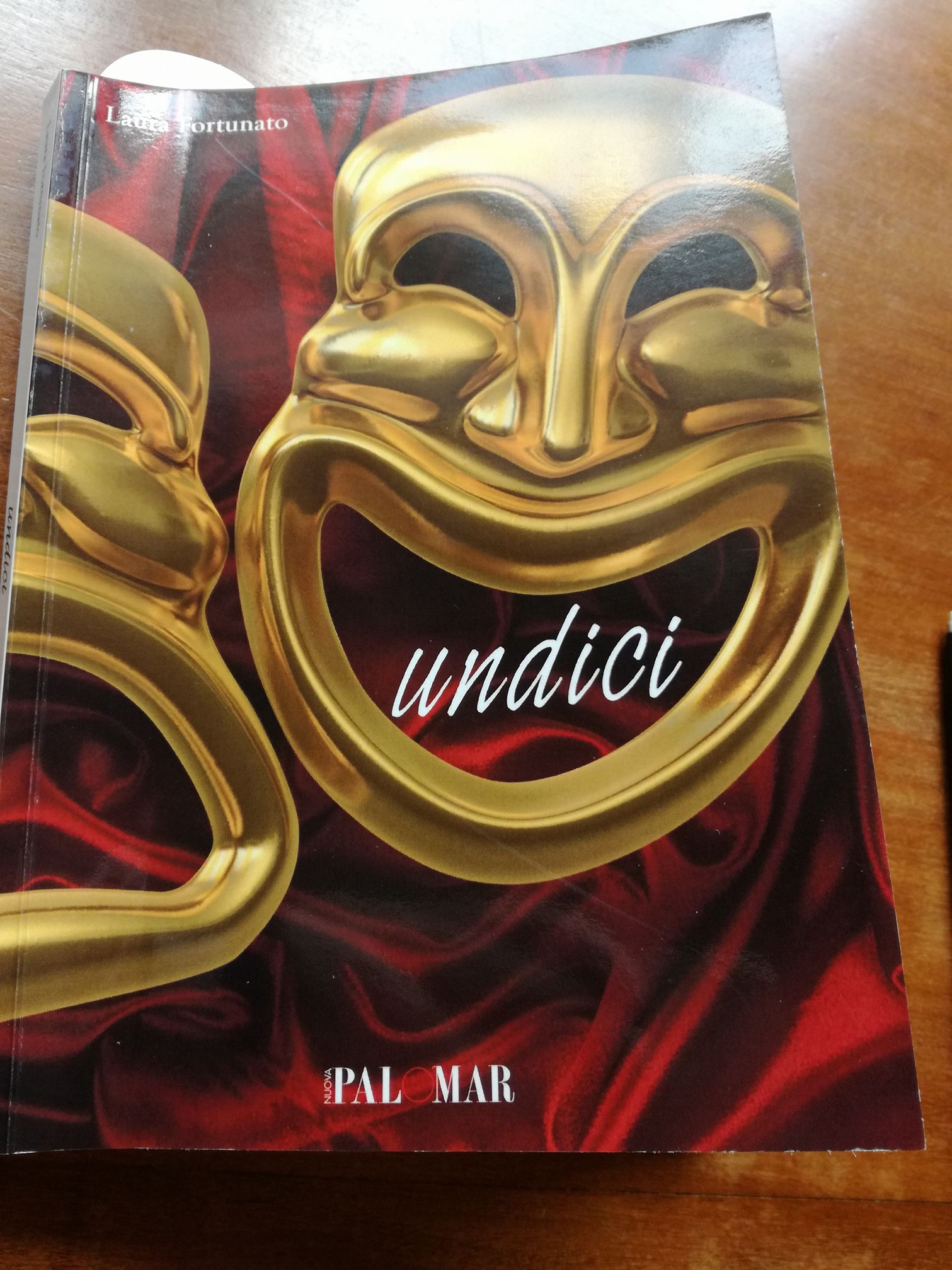
Tell us about this novel? How did you choose this title? “Undici”?
Fortunato: I've got it. “Undici” this work, because they are “Undici” the theatrical texts; this is why this number came out “Undici” and also this title
In his theatrical work “Undici” the word “beyond” is defined, which is the periphery of “artistic fiction”, “sign in the drawer” or “artistic glass”. What is the “beyond” of his characters achieved?
Fortunato: The "beyond" is always a dream in the drawer and it is something that begins on one side of the inner part of the being that, unfortunately, often cannot be achieved because there are the conditionings of society. The society that obliges each of us to cover roles that no one has often chosen.
So each character lives an expectation, something different from the role it covers in society; often, this “beyond” is not achieved because in life there are many obstacles and, therefore, there are “chains” (in fact I spoke of the “chains” in the book) that cannot be broken, otherwise there are centrifugal forces that would be lost.
Sometimes, when the characters are unknowing they discover that they have any expectations this “beyond” thanks to the help of a friend, of a familiar type “Beyond the gaze” Elisa that you liked so much; thanks to these characters we call them “helpers”, they can find out they have something they never found out they had inside themselves
“I loved this book, written with a simple and natural language, and I understood that art or, if you mean the “beyond”, makes us become, like the characters of the work “Undici”, the champions of our “I” and of real life and not fictitious”
His characters, as I read his work, are “furniture”, that is, they are transformed through the various stories that he treats, or “immobili”, that is, they are static, firm, unarmed with their emotions, fears, characteristics etc...?
Fortunato: Yes, at first it seems that everything is negative because, as I said before, life overlaps us with obstacles and sometimes they are insurmountable; but I do not like the negativity of life, I always want to find light and a spire, and, therefore, always, in all the theatrical texts I have put an attempt to achieve this “beside” or alone or thanks to some helpers; but there is always the possibility to change their existence.
So my characters are “mobiles” because they want to change their existence and often manage with the support of others, like who is sick? He is the man who is static, who is very closed, he is victim of the conditionings of society and, also, he has created himself, he is helped by his family to come out of this mask that has been created thanks to the help of the family, the wife of his children. So my characters are “mobiles”!
Inside the characters
His novel, besides, highlights the word “beyond”, emphasizes the meaning of “hope”. What is the hope of writing this work? How much hope has he transmitted in his characters?
Fortunato: As I said before, there is always a thread of hope, and to achieve something positive, even if everything around is negative. So I too, writing this book, wanted to create expectations of the possibility in life, you never know. Even if everything is still static until now, but I always hope someone realizes that this book will stage it
What is the heroic element that joins the grandfather and uncle of Giulia (in the song) “Beyond”), to Elisa (in the song) “Beyond the gaze”) and Roberto (in the song in “Canta che ti pass”)?
Fortunato: They are all noble and heroic characters because they are positive and the elements that unite them are reflection wisdom. They are characters who love life and can help others to achieve a positivity
“So this real life that is recognized with a culture, I have drawn my characters”
Are all these characters you have described referred to in real life or are they the fruit of your imagination?
Fortunato: No, no, very often they are drawn from real life because life is the one that offers us examples and from this life drawn the life of some characters. Practically it is the reality that inspires everyone, but all poets but also writers take an example from life, take something from reality. Luigi Pirandello also observed the characters, he studied them on the street and then returned home and invented
What is the message you want to convey in this work?
Fortunato: That is, even if everything around it is negative, it is not necessary to surrender, it is necessary to try never to surrender to fulfill expectations.
Inspirations and references
What are the models you followed to become a great writer?
Fortunato: I really like Pirandello and, then, I was inspired, in some popular theatrical texts, to the Casamassimese reality to something that I carry behind from childhood and that has always told me from my parents and especially from my father. I end up like one of the last “Honor’s Word”, was a story of my father from reality.
Who do you want to thank for his literary and life journey and what will your future projects be?
Fortunato: First of all I would like to thank my parents who gave me the opportunity to study to graduate because they believed a lot in me. I have to thank my family, my husband and my children, my friends in particular so Prof. Rosa Rizzi and the editor Ninì Costa who believed in me published my book. What's waiting for me? My wish is that one of these pieces of my book is staged at the theatre.
Thank you Mariateresa I am sure that when you reach the beyond, you can remove that “chain” that prevented you from smiling for a while and thank you for this beautiful interview!
I conclude this interview by mentioning one of the really interesting answers given by our writer Laura Fortunato: “Then the Beyond” is a dream in the drawer and it is something that begins on the part of the within of being that, unfortunately, is often not achieved because there are the conditionings of society. Society does not force each of us to understand roles that no one has often chosen.”
To this so explicit statement, I add that "beyond" is not only the dream in the drawer, but it is the desire for something that can be achieved and is always in tune with the "hope" that is real life. I believe that Elisa, the grandfather and uncle of Giulia and Roberto have taught us, through their positivity, wisdom and philosophy, to be ourselves, not to be afraid and to face life with the help of important elements of our society: like family, school and social institutions and friendship.
I loved this book, written with a simple natural language, and I understood that art or, if you mean the “beyond”, makes us become, like the characters of the work “Undici”, paladins of our “me” and of the real life not fictitious.
