Writing television — Interview with Stefano Jurgens
The voice of this interview
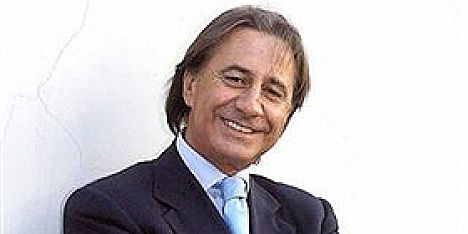
Stefano Jurgens
- Profession
- TV, paroly and humorist author
- Country of origin
- Rome, Lazio, Italy
Stefano Jurgens, the author of television, a parolyer and a humorist, is at the centre of this conversation on the theme: writing television. The dialogue retraces experiences, choices and reflections that emerged during the interview, leaving room for the guest’s voice.
The cinema and its stories
Most of the writings so far on television have almost always favoured the administrative, economic, institutional aspects: tight analysis of parties to power, stringent interrogations on the “production methods”, minuziosi accusations on the role of programming. Interesting, documented, well argued but prisoners of an oblivion: programs. Can you write a History of Literature without speaking? What about a filmless film story? Well, in Italy it is a feeling that in many people have wanted to offer us a reconstruction of the TV facts to the impediment of the abstract, if not of ideology.
Jurgens: Those who have the task of “encouraging” television broadcasts by analyzing the forms of television to interweave programming with a historical picture of the changes that television has brought to social life, were the TELEVISIVO AUTOR. The television author is the one who organizes and edits television programs by analyzing the elements and forms of a television text.
Today we will talk about the role of the television author with a very important guest: Stefano Jurgens, great author of many programs, from “The lunch is served”, to “ Corrida”, from “Ciao Darwin” to “Who framed Peter Pan, from “Domenica In” to “Eredità” until arriving at the great quiz Mediaset “Start another!”.
How did your artistic career begin? What was the world of television for you?
Jurgens: First of all, a greeting to Maxima News readers. You want to know how my artistic career started! The world of television is my world. I've been working there for 23 years and it's like a second family. My colleagues and collaborators who sometimes change, but no doubt you know a little everyone and practically television is my second home
We all know that he was a huge author of many television programs, such as “Hello Darwin”, “Who set Peter Pan”, “The lunch is served”, “La Corrida”, “L’Eredità”, “Domenica In” until arriving at the TV quiz Mediaset “Next another!”. We want to know, among all these programs and others, what is what is left in his heart?
Jurgens: “There is not, in more than thirty years of career, only a program that remained in my heart say that I am very fond of the Lunch is Served
First daily channel five program in the morning band written with Corrado Mantoni and others. and led by him for many years.
I am also fond of Alla Corrida, A Tira e Molla, Ad Avanti Un Altro, a Ciao Darwin...each of these programs brings me to mind particular moments of my life
“I’ve been working for 23 years and it’s like a second family”
What is the difference between a television author and a theatrical author? What are the elements that share them?
Jurgens: “To write a television program, a format, before you think it is necessary to keep in mind some elements perhaps a bit of conditioning, such as
The network on which it will be broadcast, the target target, the peculiarities of those who conduct etc...Every network is aimed at a different audience and must be kept in mind, in addition to the budget that is available naturally.
Writing for the theater is different.. you can design a new comedy or adapt an old already successful, there are no limitations regarding the audience since the theatrical viewer is of every age...unless you write something for young comedians and then you know what must be the young tone of writing...dette in short these are the differences.
The voice and the show
How did television programmes of yesterday and today evolve over the years and at the same time television?
Jurgens: I only say that the television programs of yesterday and today are not evolved but are “involved”; in the sense that the television of once as we can see that they make revise through ballets, shows, scenes etc.. I believe today's television is a "saving" television, a television made of people who speak without being allowed to speak, that is to speak on television to know how to communicate in a certain way. It is a talk show and politicians who fight and reality etc..
Then sometimes there is a program that is thought and written, and this is the role of the author who has to think must write. So there was no great evolution. Today you do these competition programs, you work, unfortunately, in a foreign format and you do not understand why we have to go to take the foreign formats, when we are full and the Italian creativity is rich of authors who can write an Italian format.
So, but there are these companies that see a program abroad and that works and who think of bringing it back to Italy have the same success. But it's not like that because tastes are different and adaptations are different
Listen, master, in addition to being a great television author, he was also a great parolyer. We all remember that he has written many songs for illustrious artists such as Patty Pravo, Gianni Morandi and Rita Pavone. When he writes his songs he edits them at a particular time of his life or writes them thinking about what will happen in the world?
Jurgens: But look, when I write the songs, I don't go to a cabin in Switzerland to isolate myself. I write a song putting into play my feelings and inspirations that give me music. You can't write a song regardless without knowing who sings it, for example a young man sings a text of a certain type or a middle-aged person sings another type, a man or a woman in another type.
There are many variants there too and therefore you have to stick and stay inside these “rotaries” and free creativity and musical sensibility
“I am also fond of Alla Corrida, A Tira e Molla, Ad Avanti Un Altro, a Ciao Darwin...each of these programs brings me to mind particular moments of my life”
Is it difficult to do two works separately, i.e. parolyers and be at the same time television author?
Jurgens: It's not hard! But one thing absorbs the other. For example, when I started, I was making a lot of songs because I sold a lot of music and I was just doing that. Then when he called me the television, I was absorbed by the television. But doing two jobs at the same time i.e. writing a song to make a program is not difficult at all
Is being a television author equal to being a screenwriter of a cinematic opera? I better explain, does a television author have the same purpose as a screenwriter of a cinematic opera?
Jurgens: No, it's not the same. The basis is always the same, but there are many differences: writing a script is different for a film or a fiction and it is different because you have to imagine the scenes that must be pleasant and possible scenes to shoot. Unfortunately, it is a bit necessary to limit the imagination; we must not imagine taking 20 aircraft, 4 helicopters and 10 ships into a film.
We have to keep a little bit short, then there is a whole system of writing; some of the scripts wrote a little less, still today, the movements of camera and frames; know the frames and the name of the frames away etc. So this is not required in television writing as it is the director who decides the point of view of the film
8) “What are the objectives (the purposes/ purposes) to become a television author and to write a television text and to realize a program”
A key element in achieving a program is that the program must be commissioned. Hardly you have the idea of proposing compared to doing so. The TV networks have a boom in listening to the palimpsests who have to fill the TV programs that can be both daily or fiction or variety; and so they are these palimpsests who commission you a job and just what they commission you must think
The present and the projects
What will your future projects be? Who would you like to thank for his personal career?
Jurgens: Currently I work with Paolo Bonolis and we will resume in March the new edition of “Hello Darwin” and I am working with him and with Luca Laurenti. I would like to thank, first of all, my father who has brought me to meet people who have guided me in this work.
I would like to thank all the people the important authors of the time I worked with and collaborated and from which I stole something trying to learn then I have to thank the good luck my head that every now and then I can indicate the new inspirations
I conclude this interview by mentioning an answer from our author “To write a television program, a format, before I think it is necessary to keep in mind some elements perhaps a little conditional, such as
The network on which it will be broadcast, the target target, the peculiarities of those who conduct etc...Every network is aimed at a different audience and must be kept in mind, in addition to the budget that is available naturally”. To this statement by our Stefano Jurgens, the television author must have reins to write a television text with the aim of creating a program. The television author is not the author of a theatrical or cinematographic work, but is the engine of the television program.
The TV author must have the ability to think about putting into practice a program, choosing which format should go on air, selecting the presenter to conduct that program and interact with the public. I conclude by saying that television without its author can no longer work!
