Music as a universal language — Interview with Beppe Vessicchio
The voice of this interview
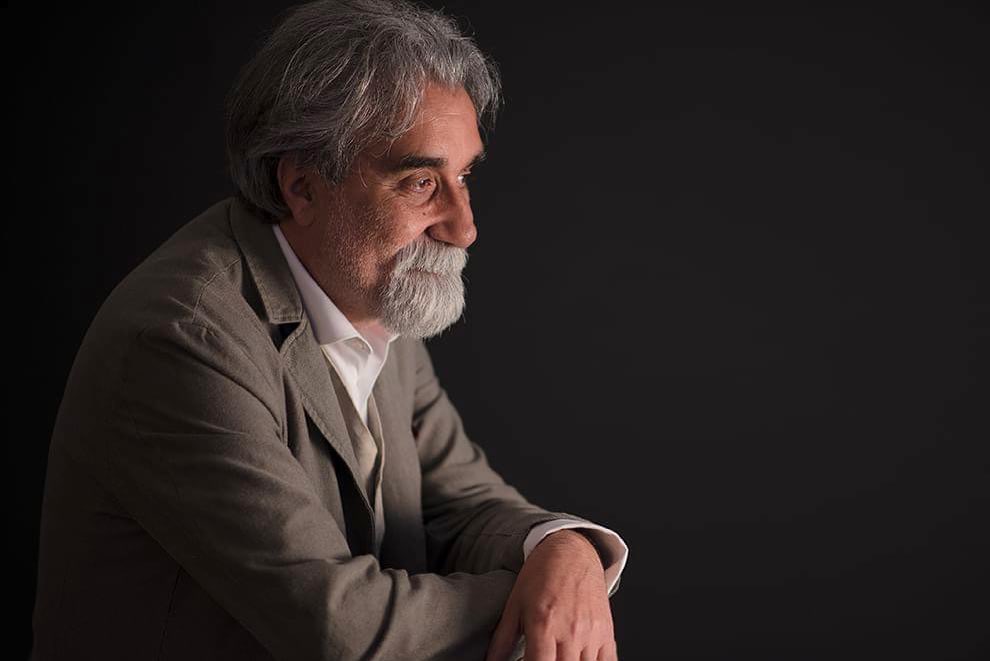
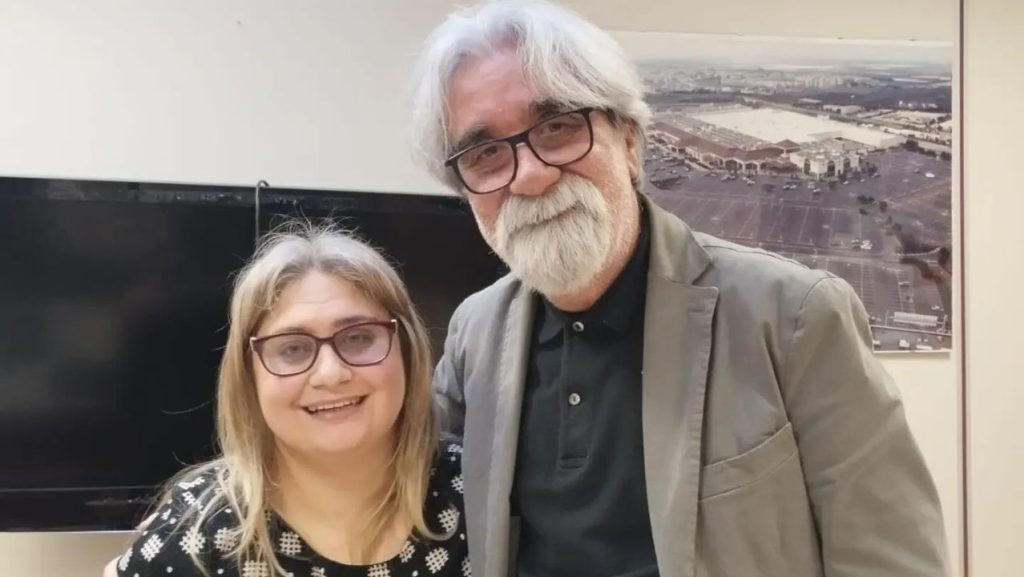
Giuseppe “Beppe” Vessicchio
- Profession
- Conductor, composer and arranger
- Country of origin
- Naples, Campania, Italy
Conductor, composer and arranger, Beppe Vessicchio reflects on the meaning of music and its power to unite. From personal passion to work with artists and orchestra, the conversation also opens to the formation of young musicians.
Music and words
When was your connection with music born? What does it mean to her to call it a voice of art?
Vessicchio: “First of all, I can’t go back so long and remember when it all started. It seems to me that it started from birth, that is in my house music was made, the music served to celebrate, the feeling that it was celebrated life, but I do not remember particular anecdotes to which to refer.
On Sunday the family gathered, there were my father’s sisters who were so many; my brother and sister sang and I was a part of this event and I was smaller and I was trying to play as many instruments as possible and imaginable to be part of this party. But from there I realized the great value that has music already within us. Never and since the music is present in all the others that surround us, it becomes the common tool that you can connect.
In my opinion, beyond any other separation, when we talk about music as a universal language, all in all it says is a true thing and it is the second language of peoples. I have met many musicians with whom I could not exchange two words because their own languages were impossible and far away, but when we had different instruments in hand and the score language was absolutely common, so it was universal because they join us in multiple points of view.
“In fact, Richard Wagner, a great musician of 1900, had theorized the musical reform the “WORT-TON-DRAMA”, that is in a unitary work word, music and stage realization by a single artist. This reform, as Master knows, will be resumed by the Avanguards to realize the famous principle of inter-artisticity, that is the union of the arts”).
Not only that, Wagner recovered it from the Greeks because, as you know, the music comes from the Greek “mousikë” meaning “arts of the muses”. So he already alluded at the time, to a very complex action made precisely of physical gestures, words and sound. So every time we always come back to this point. I mean, sometimes we forget about it, do disciplines live separately, but when do they find strength?
Just when our senses, such as sight, hearing from the point of view of the pleasantness of sounds, but also the word that gives us content, find this synergy capable of engaging us. I hope that they can all come together again in forms where the public can, in our opinion, participate much more than that which is the simple song; therefore, I wish to renew what is the culture of musical theatre.
We already know the musical, also the musical theatre, the opera, the melodrama. So we hope that a form of show can be cultivated on this trail.”
What role did he play in transforming music into a profession?
Vessicchio: I would like to say a lie, in the sense that the will has not been determined, no; I think that I have not been able to do without realizing this; it was the matter of itself that kidnapped me, so I did not have to make a great effort.
The only great effort was to study architecture, that is to attend scientific and architectural high school and parallel to the studies of music because as in the families of the time, someone will remember and in short take care of music, taking care of art is not a profession. So when does he say what you're doing? I guess I do music no, for work what do you do?! So it was not considered remotely the hypothesis of social employment.
Instead it happened for me, of course, makes me happy on one side, but you have to be careful about this because when a passion becomes a job, it risks losing the look of the beloved, of the pleasure because maybe you look at the aspects.
Let’s say what we counteract we said well you look at the profit that you get, losing sight sometimes the aspect of passion and research that characterizes the musician in the first part of his life and surely know, to know and to experiment [GROANS]
“I hope they can all come together again in forms where the public can, in our opinion, participate much more than the simple song; so, I wish to renew what is the culture of musical theatre”
In his career he has collaborated with many artists; it is true that he has won three Festivals of Sanremo. Among all these artists, what is he who remembers with great emotion? What did you learn from their extraordinary art?
Vessicchio: “Let’s say that the songs I accompanied on the podium at the Festival should be four or five, because then on one is a strange mystery.
Sanremo is a part of my life: one of the very first experiences, among other things concerns Roberto Vecchioni in 1985 (in that period there we made two tracks in his record one was called “LA MIA RAGAZZA”) and therefore with Roberto I had an ancient frequentation after the case he wanted us to reconquent in 2012 along with white hair and among other things it was necessary to say against any huge pronoun because there was no mention that there was
However, the strange thing and the road between the tests on the evenings we realized the great participation that developed this song not only on the audience but also on those who listened, on the orchestra itself for which a little inside we covavano, that is the idea of doing it, but the reason told us that it was impossible, when in the end we discovered that the victory had arrived obviously was happy.
That’s if I have to say this generation of songwriters, in this I refer to Gino Paoli, with whom I previously collaborated and to Vecchioni, they were healthy carriers of a life dedicated to music, to the song among other things in a very artisanal, very analogous way, that is by making evening meetings, and I have accumulated so many experiences.
Once there were no stadiums that were public at concerts; therefore, the musician or the singer had to go as a good craftsman had to go “home by house” even no exaggerated! But let's say we make small premises and from there he had the opportunity with a greater attendance. Today we see that Vasco Rossi makes five concerts, there he concentrates in a stadium and worked five days a year. However, the artist’s beauty, in my opinion, is to meet the public.
So these artists came from another story, they came from the continuous attendance Renato Zero, Gianni Morandi, all artists who had a constant meeting with the public and this creates a remarkable exchange also an enrichment.
Gino Paoli was for me a mine that I knew how to listen to him; therefore, from his voice I could learn so many not only from his voice because I think when we wrote together in symbiosis as it happens with plants, I learned all the things that he put in music”.
Master Ezio Bosso always said that “The MUSIC Is like the LIFE, but it can be done in a OLD MANIERA: INSIEME”. Citing this phrase of the unforgettable M° Torinese Ezio Bosso, as director, how can he create a single set with the orchestra that from time to time directs?
Vessicchio: This is a small miracle that happens every time. In fact we have in common a text that is a musical score. When the musicians find their ability to participate in the text without subordinate roles to the main ones; therefore, where they realize that their part has a consistency in the whole, let's say that this effect happens automatically.
In fact, there are scores in the history of music (I don’t speak of that kind of Pop, but I talk about that Classic, which has hundreds of years of extra gyms), there are scores where I know that the orchestra automatically finds its cohesion. Of course, if the director is able to coordinate all this and participate in this situation by offering a vision that finds feedback, then sharing with the orchestra, this alchemy is discounted.
Then it’s clear there’s evening and evening, moment and moment; I realize the difference between one test and the other, so let’s figure out when the audience of the room comes in how many variables coexist. However, if this cohesion of the strength is created once, I think it is very easy to renew
“The musical we already know, also the musical theatre, the opera, the melodrama we know it”
Music and words
On June 21st, as every year, the Music Festival takes place. The Music Festival is 30 years old and this year was dedicated to the birth of bands. Music is the absolute protagonist that brings universal message to different peoples and cultures. How has music changed from then to today?
Vessicchio: “Well, the band institute is fundamental! Because in a big city there must be formulas to approach musical practice. But in all provinces the band has always been a fundamental reference point also of literacy, indeed perhaps in some provinces have been privileged, thanks to the bandistic distributions should be recovered, supported because it is a kind of territorial garrison very capillary.
If we go to look at how many conservatives coexist we realize that they cover the bands of the territory; instead, the bands are moments of approach, among other things, it is extremely playful and functional that are fundamental to approach young people to music.
Young people to music, it means the musical language (I say maybe something that will seem strange), but most pop singers we listen to and who go for the major do not even know notes are singing, I don't know if they are singing a la or a sol and most; and so we find ourselves now emulating to follow a world that has so many insecureties.
It would be nice if this is always the same way, but it had a relationship with what is the code of the system; and how can I say I know how to play but I can not read the script I have to learn by memory: “What do I learn? "I don't even know what that means.
This is a little bit the limit of making music nowadays and among other things the conservatives are bending to this logic because in order to welcome more and more members, it widens the meshes not only a bit widens a whole series of precepts that I think are fundamental.
I want to know how to read why it is important that I know what I do; so the band in my opinion should recover people because you can't play in the band improvising you have to do your part you have it side by side you have the other flautists the other clarinetists, if you mistake the first time you put it in place and looking at the score you have in front and you understand that you have wrong”.
What would you like to recommend to young talents who want to take the path of the world of music?
Vessicchio: I would say that I abandon the idea of becoming someone and instead of finding the passion for what it does, because it seems that since always be here, even this did also those of my generation (i.e. if the singer yes but if you did not Sanremo you are no one), but you can be singers regardless that you can do music regardless this is the good thing is the relationship that you establish with the matter if the matter is so amazing passionate devote us, because this is football.
I say that you have to take advantage of your passion to understand who is an instrument of relationship is a tool of peace among other things. I would like to emphasize that all acts of bullying that we hear and watch on the news we read in the newspapers, in the world of musical information institutes it seems that there are therefore no means that music has a great power to get away from stupidities.
What is the soundtrack of his life? Who would like to thank for his journey and what are his next projects?
Vessicchio: “Look, I should thank so many of those people who would no longer be there are so many who you have to thank because they are the people who from time to time in the various stages of my life that I do not know if they were a growth is not to me to say, however, they have actually been decisive and important to focus on the value that from time to time I tried to get over; there are so many teachers and artists that I have met and sometimes even musicians who in theory would be subjected to me to myself.
Future projects? The future project quite immediate, the opening of this Academy, which is called “Peparini Academy” because it is Giuliano Peparini who wanted to invest so many economies in this project and knew about my desire for a functional teaching for musicians and involved me.
I’m sick of his request, because he also found my programs in my intentions related to hiss; so this thing encouraged me has in this reality are so many things that I do but at the moment the closest one, because there will be a presentation just on May 15, it is precisely this of the academy of Peparini and we are both endowed, he comes from the discipline of dance that is very important, so above all it requires a lot of engagement because on the contrary
Here they have learned this fact of commitment, so you know what I mean when the kids are engaged in musical discipline so this is the next thing then there are so many others but you prefer to say that there is this that deserves attention”.
