The craft of making smiles — Interview with Alessandro Schino
The voice of this interview
Alessandro Schino
- Profession
- Actor, author, cabarettist and speaker
- Country of origin
- Bari, Apulia, Italy
Alessandro Schino, actor, author, cabarettist and speaker, is at the heart of this conversation on the theme: the craft to make smile. The dialogue retraces experiences, choices and reflections that emerged during the interview, leaving room for the guest’s voice.
The public and the language of comedy
When did you find out that you had the artistic vein to become a comedian? What was the theatre world for you?
Schino: I'm told I was going up to the chair at four and I was telling the joke about the cheese ghost. It was my battlehorse. Then I started to tell the yellow rag, but we're in a protected band. I can't say it again. Don't ask. In fact I have always been on stage, since kindergarten, elementary school, average. Then I stopped in high school. I almost saved myself.
Unfortunately for the public then came the tourist animation, I entered the tunnel and I couldn’t stop anymore. Even if to tell the truth comedy for me was a somewhat late discovery. In the sense that apart from childish exhibitionism, I didn’t know I had comedian talent. Okay, I shot her big, let's say I didn't know I wanted to be a comedian! In the animation in the early years, I played shoulder roles.
As long as my partner Titta literally discovered me, proposing a comic radio broadcast on a local broadcaster from there was born everything. The world of theatre I know is certainly less
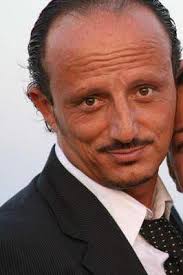
We know you as one of the protagonists of the duo 8 and 1⁄2 comedian “Zelig”, but you were also one of the many Italian comic actors. Among all the characters you played in your artistic career, What is what you have left in your heart? What are the attributes that characterize it?
Schino: It’s really difficult to answer, every character is a little bit of a son. Both theatre and comedy. In general in every character who takes on stage, comedian or not, there is always a part of us, there must be
What taught you about the transmission “Zelig”? How has the comedy theatre changed over the years?
Schino: Zelig for us was a strange experience... we didn't really do zelig tv, but we did auditions to Bari and Giancarlo Bozzo asked us to join the cast of Zelig C.U.L.T. Acronym of Comici Uniti Freely Transgressivi, a spin-off dedicated all to satire. We recorded some episodes, but then the broadcaster decided that it was not the “historical moment” to make satire and the project was born. Then the LabZelig on Tour started and we entered the stable plant in the cast.
“That’s why the theatre is our life around us and provides guides to walk high-headed”
The theatre was born in Athens in the feasts dedicated to Dionysius, the god of wine, which took place in the court of the fallacious. While the comic theatre was born in Rome thanks to the Latin texts of Terenzio and Plauto. My question is this: How much is the link between the playwright and the actor strengthened? Or are there any discords between them?
Schino: When the report is there (because there are no classical texts for e.g.) it often happens that the author is also a director, and therefore it is of course very important. If the author is not also a director, then it should be theoretically done aside to leave the deacon to those who care for the direction. Contrasts are often there. It depends on the personality of the actor of the director and the method that each follows. It can happen anything. Lites, contrasts, feeling, harmony, tensions, idyllic. Everything!
Sometimes she throws the kisses on us again!
The public and the language of comedy
The Pirandellian theatre is based on the idea of humor, that is, on the feeling of the opposite. Pirandello said that we actors are “masks”, that is, we are people that we differ from the characters because we recite the part dictated by society and improvisation. Does your theatre (we iron “Schiniano”) approach the idea of Pirandello’s humor?
Schino: “We all wear a mask, at least one and more than one. In comics, the social masks that we carry and can recognize are often constructed and reproduced; they are often also revealed when the viewer has only a latent knowledge and awareness of the mask itself that carries in person or from which it is surrounded. It is a “game” always very fun to create and interesting this between public actor. So, yeah. Somehow he approaches.”
6) What a difference between improvisation imitation
He's got a lot of money. Imitation is a form of comedy with so many variations, with its history and its dignity that is lost in the night of time until the comedy of art. Improvisation can be a moment of a comic show and/or cabaret, sometimes totally unexpected and caused by an “accident” of stage or coming from the public, in which the actor (comico in particular) must be particularly skillful ready both in listening and not hiding what cannot be hidden.
Then there is theatrical improvisation as a form and discipline to itself that has its rules its very distinct bases from the comic theatre, from the imitation from the cabaret.
Do you feel like a comedy or dramatic actor?
Schino: I feel like a comedian. I'm a comedian. But we know that every clown conceals a dusk, melancholic or hidden lyrical side. I think it's worth it for me, too. In general I always preferred roles and fun pièces.
“The world of theater I know definitely less”
What are the models you've inspired to become a comedian?
Schino: “Everyone and no one as I think is right. In the sense that to make a comedian you must necessarily see everything. Classics contemporary, all kinds. Everything. Then find your way and try to build your own personal style, which comes from you, from your own way, from your clown, from your sensitivity.
Among the great Italian comedians I loved madly Luttazzi and Grillo. I like the versatility and completeness of Fiorello, the unexceptionable technique of Proietti. The greatest of all, however, remains Walter Chiari.
What is your soundtrack of life and professional?
Schino: Rock. It's my music. He often uses it as a soundtrack for shows. When I write though, I love to listen to lounges, chillouts and sometimes soul. It helps me concentrate.
The present and the projects
Who would you like to thank for your professional personal journey? What will your future projects be
Schino: “projects future? Lots. We just debuted with the new cabaret show by Otto&Mezzo;, “born with the shirt” and we will turn it. Then I'm writing my new monologue show that I'm not telling you anything for now. And I'm working on the second book after “Ara and Frizz”. Soon we'll be back on the radio, and then I have an idea... okay... I can't talk... go! But if you want, I'll tell you, but you have to insist, okay, shut up.
The first person I have to thank mentioned earlier, my partner Titta Rizzo, who 25 years ago put me in front of a microphone and then from there everything started. Then there is my muse, my wife Ilaria, who believe me, is an exceptional comic co-author. Either way, without her, I wouldn't be what I am.
I conclude this interview by mentioning an answer given by our artist: “It’s really difficult to respond, each character is a little bit a child. Both theatre and comedy. In general, in every character that takes place on stage, comic or not, there is always a part of us, there must be”. To this statement given by Alessandro Schino, I add that each of us are characters and not people, because we are the real protagonists of our lives.
That's why the theater is our life around us and provides guides for walking high-headed.
