Between theatre, cinema and television — Interview with Vito Farolla
The voice of this interview
Vito Facciolla
- Profession
- Actor
- Country of origin
- Polignano a Mare, Apulia, Italy
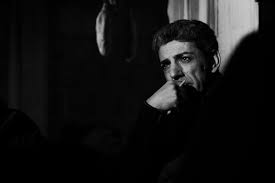
Vito Farolla, actor, is at the heart of this conversation on the theme: between theater, cinema and television. The dialogue retraces experiences, choices and reflections that emerged during the interview, leaving room for the guest’s voice.
The beginnings and passion
How did your artistic career begin? What is the world of theatre and cinema for you?
Facciolla: Greetings to you! My artistic career has started since I was a kid, during elementary schools my teacher had seen in me the artistic vein and above all I became the absolute protagonist for all elementary performances. Then as an adult, I tried to become a professional actor with proof of what else and started working. The world of theater and cinema I practice them every day and are my “daily bread”!
You've been the protagonist of so many fictions and successful films. Among all the characters you have interpreted, which one of these is what you have left in your heart? What are the attributes that characterize it?
Facciolla: Look, I've never made a star movie, I've only made co-stars like Mennea, etc... there are so many roles. Each role is different from the other and each of these roles leave you something inside, especially so the roles done well when you see them on the screen and do not recognize you and then you did a good job.
I can't tell you what character I'm fond of, maybe to Salvatore De Vito, a miserable character in the film “Henry” by Alessandro Piva, who was my first co-star film. It was a character who lived in a somewhat misguided environment and is far from me!
Do you feel like a comedy or dramatic actor?
Facciolla: I was born as a comic actor, in the village in Polignano I know everyone for comic art and I was able to entertain the square and entertain the audience for 2 hours, then studying I consider myself a tragic-comic actor and then the comedian and the tragic-comic or dramatic must travel parallelly
“Yes, indeed, the theatre reflects life and masks reflect a part of society what they say”
What is the difference between fiction and sit com?
Facciolla: AH you don't have a normal question ( laugh)! Then the difference between fiction and sit-com is notable mainly from the productive point of view of the texts. The sit-com, by nature, must be short, the bets are very short attracts a certain circle of audiences; while the fiction produces a little long series done well. As always in sitcoms and in fictions and, also, in films it is important to use the screenplay
The cinema and its stories
The “Commedia dell’arte”, we all know, was born with the dramatists Terenzio and Plauto and we know that the actor is the creator of the messincene and is, sometimes, in tune with the dramatist. Do you think this union between dramatist and actor can continue in theater and cinema, or are there discords both sides?
Facciolla: No, no discords have never been. It depends on the dramaturgy, the texts that you take, for example if we take classical texts like Shakespeare, Cécov and we have no reference with the authors. Speaking of modern authors, above all, at the theater are often put on stage the author gets in touch with the ok to the messincene.
Sometimes there is also a confrontation with the author because he tries not to betray his idea and his text; and then, both in cinema and in the theater an adaptation is made and you know very well that all the films are taken from the novels and that they must not betray the novels themselves and precisely because the language is theatrical and cinematographic is different from writing. So a director has to sum up, I know, in a few scenes in a few pictures all a chapter
The Pirandellian theatre is based on the poetics of humor (the feeling of the opposite); it (the poetics of humor) made a distinction between person/character (mask), asserting that the mask recites the part dictated by society and creates the verosimile. Your theatre (Let’s call it the “Faccialliano” theatre) is combined with the poetics of Pirandello’s humor?
Facciolla: Yes, indeed, the theatre reflects life and masks reflect a part of society what they say. There are often actors who play themselves in the theatre, and in my theater I always try to wear a mask, through which I tell the border very quick because what the mask says in my theater and also what I write, no. So you can’t distinguish the mask from the actor well, because sometimes you can overlay
“The world of theater and cinema I practice them every day and I am my “daily bread”!”
Let's talk about movies. When the director gives you the part, can you get into the character right now? How has the cinema evolved in the last years of its excursus?
Facciolla: “The cinema, we say, in the last 2 years has undergone a clear revolution: as, there is no film anymore, but there are digital instruments paradoxically it is all easier. You know very well the famous saying ” Good the first!” refers to the last meter of film and the actor could finish the scene, instead with digital means everything is simpler you can turn one hundred times with the assembly you can solve everything.
As for the other question, there is a study, there is a meeting with the director about his idea and what he would like; often, at the cinema there is no time for improvisation as in theatrical tests, so there is a script dictated by the director and never there must be evidence that in Italy it is difficult to have a moment of evidence. One can propose certain jokes invented or added.
But lately I like to work at the Mastroianni, I go on the piece quietly trying to build my character slowly.”
What are the models you've inspired to become a great actor?
Facciolla: We had actors as a point of reference, but in fact I did not inspire anyone because I believe that each one of us is a single person; that I know Totò or everyone can imitate Totò, but Totò was one and only, where there is one of Vito Fala, Mariateresa L’Abbate but each of us has its own peculiarity. Then according to the roles you interpret and the characters you need to inspire us by seeing them in the movies, but never, remembered also for you Mariateresa, we must not imitate them
Inspirations and references
What is the soundtrack of your professional personal journey?
Facciolla: One word that is the soundtrack of the path of the formation of the actor: the “precariousness”.
Who would you like to thank for your professional personal journey? What will your future projects be?
Facciolla: “I would like to thank my parents who have always encouraged me and then nobody, indeed I thank myself that starting from Polignano I have made so much way alone, with auditions and academies. For the project for the continuous future with my theatrical show “Vitus” and I continue to make fiction and theater. I thank you, Mariateresa, for this interview and I thank my audience who has always followed me.
A tip to give you and that you have to put your feet on the ground if you want to do this job, indeed continue to study to achieve success. Continue to follow me on my Facebook page.”
