The voice, words and emotions — Interview with Jolanda Granato
The voice of this interview
Jolanda Granato
- Profession
- Voice and radio conductor
- Country of origin
- Nocera Inferiore, Campania, Italy
Jolanda Granato, voice voice and speech and emotions are at the heart of this conversation. The dialogue retraces experiences, choices and reflections that emerged during the interview, leaving room for the guest’s voice.
The beginnings and passion
How did your artistic career begin and what was the world of dubbing and radio for you?
Granato: Since I was a child, I had two dreams: to be a “journalist on the radio” and to “give voice to cartoons”! I started to follow a diction-reciting crisis while working with some local broadcasters in Campania as a sports editor. As soon as I was 18, I moved to Milan and did an internship on radio 101. I finished my internship and started making me feel around and sending my auditions.
After a few years of further watering in local editorials I started a trial period at Rtl! It proves that after a year he has become a professional journalist's contract. In the meantime, I was following a doubling course and I was beginning to follow the shifts of my colleagues to learn! I built two careers in parallel that gave me great satisfaction. I'm lucky to work in areas I love.
Works I got with years of practice and sacrifice, but doing what you like is priceless
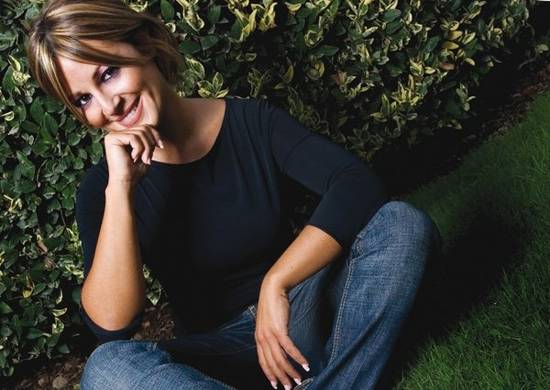
Is it difficult to interpret two different roles: to be a dubbing machine then, at the same time, a radio conductor?
Granato: In fact, they are two quite complementary roles. For both, you must convey emotions through your voice. On the radio, you talk to listeners, in voice-dating to actors who have long studied to play that role. Emotional participation is necessary for both works. And then personally I love to be “behind the scenes”
“Emotion and participation are necessary for both jobs”
The phonetic is the science that studies the origin of the sound of the word called phono and phonology is the science that studies the structure and analysis of the sound of the word. Together they are part of the senatory apparatus. My question is this: how much is the phonetic important for dubbing? What is the element that combines phonology and phonetics with the dubbing world?
Granato: The dubbing is completely based on vocality. The words pronounced in addition to being intensely shortened must be well scanned, pronounced in correct and articulated diction so as to be comprehensible without appearing mechanical. Then you have to learn to “take the voice without shouting”, to “dismember without going head”. To use the diaphragm to breathe inside the jokes. Technically, dubbing is a very difficult job.
And in addition to exercise and experience, I think a little natural predisposition is necessary to get closer to this world!
Are there any similar combinations between male and female dubbing?
Granato: It's the same job! Nothing changes. Male voices have different colors and stamps. But the procedure in the dubbing room is the same
The voice and the show
On the radio What is the relationship between a radio host and the listener?
Granato: As for me, being very empathic, it is a beautiful and fundamental relationship! Having continuous feedback on what we do and we say is very useful. In this social networks and instant messenger help a lot because you can create a loyalty with listeners, a relationship of trust
“For both we must vehicular emotions through the voice”
You have worked for many years on RTL102.5 with a radio broadcast along with your colleague Pierluigi Diaco called “Honourable DJ”. Well how did this radio program format start? What did this collaboration teach you?
Granato: Beautiful and formative experience. The format was born from an idea by Pierluigi that successfully carried it forward for a while. A winning formula that provides continuous interaction with radio listeners called to tell them about the major topical issues. He taught me just how important it is to create a connection with listeners, to carry out discussions in which to put themselves in play first person
Among the stories of so many radio listeners, what is the one that touched you most? Who among the radio listeners has remained or remained in your heart that you have a beautiful memory?
Granato: Of course a radio listener was there! Look, it seems to me that she is the journalist who is doing this beautiful interview to me! Thank you so much for the video of my birthday you did and you never missed your affection. You're a beautiful person!
Thank you! Who would you like to thank for your professional personal journey? Now what will your future projects be?
Granato: “I always thank my parents. For allowing me to do what I already wanted to be very young. To be so smart that I always wanted my happiness and to help me build it. The road is much less tiring if you have a family behind you who supports you makes typhus for you!
I am now collaborating on the birth of a new project linked to an important editorial group “radio novella 2000”. I continue to work between Milan and Rome in advertising as a speaker. Thank you very much for your work!
I conclude this interview, mentioning a very detailed answer from our guest: “The dubbing is completely based on vocality. The words pronounced in addition to being intensely shortened must be well scanned, pronounced in correct and articulated diction so as to be comprehensible without appearing mechanical. Then you have to learn to “take the voice without shouting”, to “dismember without going head”. To use the diaphragm to breathe inside the jokes.
Technically, dubbing is a very difficult job. And in addition to exercise and experience, I think it’s necessary a little natural predisposition to approach this world!”. To this answer, I add that the dubbing is a consequence also of the artistic language and that, thanks to the VOCE, the dubbing can be smooth and also beautiful. Without the voice, we can’t double who is on the other side of the screen.
The cinema is generally grateful to the dubbing because they can study the movements and Voice of international actors. This is what the dubbing means and I think that Jolanda Granato taught us that to study well the dubbing we must first “to emphasize the sounds of words without going to free wheel” and use “the diaphragm to breathe at the moment when we pronounce the jokes”. Without the dubbing, we can't do the cinema.
