
Tell the story of television — Interview with Herbie J. Pilate
The voice of this interview
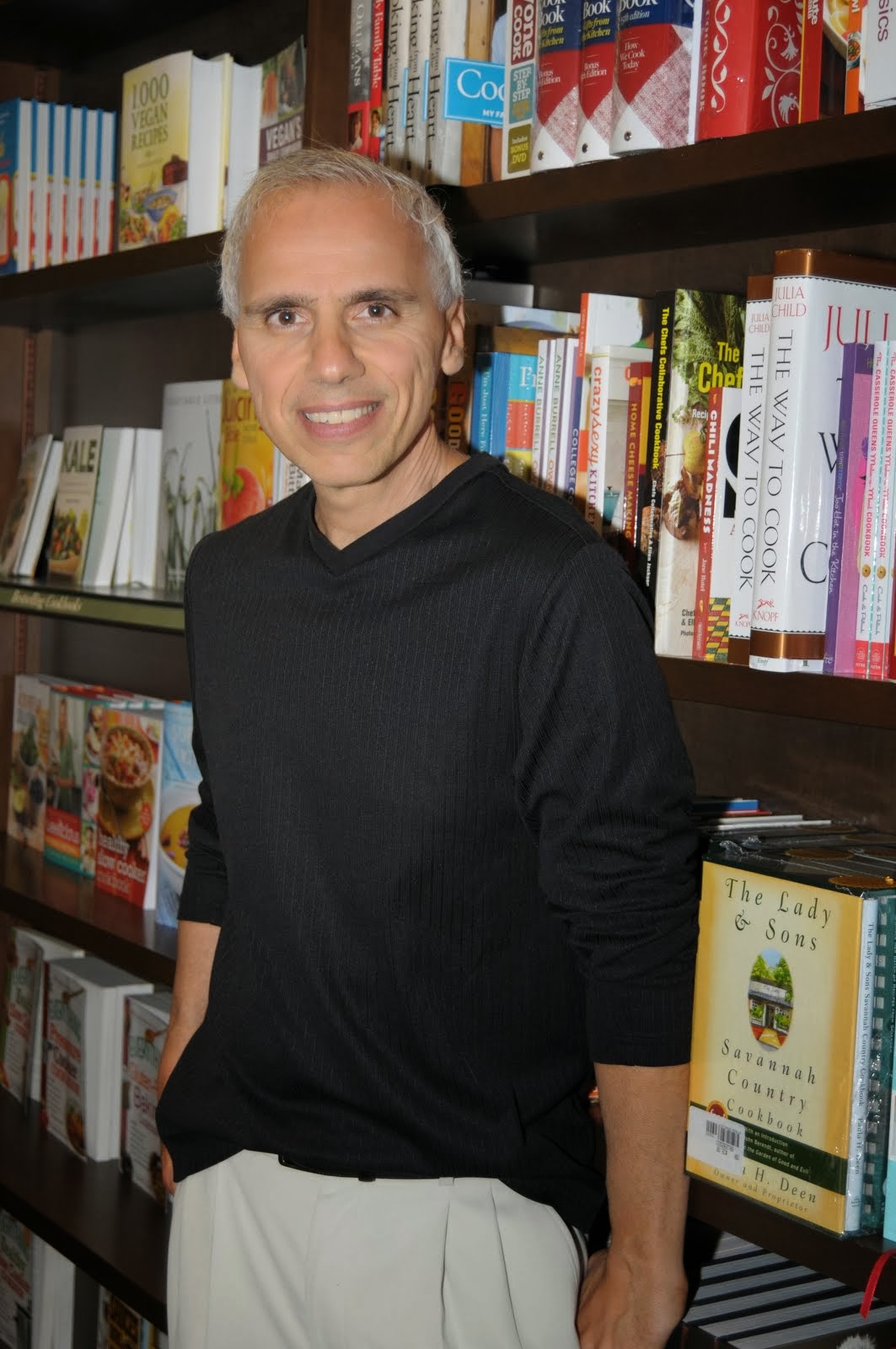
Herbie J. Pilato
- Profession
- Writer, author and television producer
- Country of origin
- Rochester, New York, United States
Herbie J. Pilate, writer, author and television producer, is at the heart of this conversation about the theme: telling the story of television. The dialogue retraces experiences, choices and reflections that emerged during the interview, leaving room for the guest’s voice.
The cinema and its stories
How did you get to the world of the CINEMA TANTO to become PROTAGONISTA with its TANTI SAGGI and LIBRI?
Pilato: “I started as an actor in the 1980s. I was also singing and dancing. But I had always left the TV show Life as a witch as I grew up in the 1960s and early 1970s, and later I was inspired to write a book of accompaniment for the show. This happened for the first time with The Book “Bewitched”, which was subsequently revised as “Bewitched” Forever. Then I wrote two biographies about Elizabeth Montgomery, the star of “Vita da witch.
HOW DID HE APPROACH THE WORLD OF CINEMA SO MUCH THAT HE BECAME THE PROTAGONIST WITH HIS MANY ESSAYS AND BOOKS?
Pilato: “I started out as an actor in the 1980s. I was also singing and dancing. But I had always left the TV show Bewitched while growing up in the 1960s and early 1970s, and I was later inspired to write a companion book to the show. That first happened with the “Bewitched” Book, which was later “Bewitched” Forever. I then wrote two biographies about Elizabeth Montgomery, the star of “Bewitched.”
THE CINEMA, HOW WE KNOW, BETWEEN THE END OF THE OCENT AND THE FIRST INIZES OF NOVECENTO WITH THE FRATELLI LUMIERE. OPI HAS ADOPTED A GREAT SUCCESS WITH MUSICAL, FILM OF FANTASCIENZA, FILM WESTERN, CINEMA MODERNO, ED The ART SETTIMA, THE SETTIMA PART OF THE ARTISTICLE WORLD AND IS THE AGGREGED OF VISIVE ARTS. _ I'm going to get her. Do I want to know what is the ELEMENT that has interjected into the POSITIVE AND NEGATIVE CINEMA MANAGEMENT?
Pilato: I am disappointed that television feature films have become much more violent and vulgar in recent decades. Besides violence and vulgarity it is not necessary to tell a beautiful story on TV or at the cinema. There may be some scenes in a movie or television program that require violent behavior or certain vulgar words. But not as much as it is presented today in TV shows or movies.
In addition, it bothers me that many of the actors will break their words that sound effects and music in TV shows and movies are more noisy than the actors. Many times, I can't figure out what actors say because they speak low, or stubble or they are tempted by other sounds. In addition, lighting is too dark in many TV and film programs. So, not only can I not always hear the actors talk, because I can't even see them. And when I see them or hear them.
They all look and play the same. There is no distinction between the actors. And they all seem to interpret the same sarcastic characters. Everyone's sarcastic. Everyone raises their eyes to the sky. And everyone is too perfect and beautiful. There is no variety in the actors. And that's not a good thing.
CINEMA, AS WE KNOW, WAS BORN BETWEEN THE END OF THE NINETEENTH CENTURY AND THE BEGINNING OF THE TWENTIETH CENTURY WITH THE LUMIERE BROTHERS. THEN IT HAS HAD GREAT SUCCESS WITH MUSICALS, SCIENCE FICTION FILMS, WESTERN FILMS, MODERN CINEMA, AND IS CONSIDERED THE SEVENTH ART, THE SEVENTH PART OF THE ARTISTIC WORLD AND THE AGGREGATE OF THE VISUAL ARTS. _ The WANT TO KNOW WHAT HE HAS INTERPRETED IN A POSITIVE AND NEGATIVE WAY ABOUT CINEMA?
Pilato: I am disappointed that television and feature films have become much more violent and vulgar in recent decades. Over violence and vulgarity is not necessary to tell a good story on TV or at the movies. There may be certain scenes in a movie or TV show that calls for violent behavior or certain words vulgar. But not as much as is presented on TV shows or in movies today.
Also, it bothers me that many of the actors mumble their and words that the sound effects and music on TV shows and movies is louder than the actors. Many times, I can’t understand what the actors are saying because they are speaking low, or mumbling, or being muffled out by other sounds. Also, too, the lighting is too dark on many TV shows and movies. So, not only can’t I always hear the actors talking, because I am unable to even see them. And when I do see or hear them. They all look and sound the same.
There is no distinguishment between the actors. And all of them seem to be playing the same sarcastic characters. Everybody is sarcastic. Everybody rolls their eyes. And everybody is too perfect and beautiful. There is no variety the actors. And that’s not a good thing.)
The cinema and its stories
What did you say and what did you not have the HOLLYWOODIAN CINEMA from the ENGLISH?
Pilato: There is a great beauty and eloquence in Italian cinema. But I don't see much on American cinema television. Of course, there is a great talent on television in American films, behind and in front of the camera. But that talent has lost its key guide in the last decades or so. Today the narrative has become dark and shaky as the illumination dialogue. There are no more happy endings. Hollywood no longer knows how to make movies and TV shows with happy ending.
This has lost that quality and has moved too far into the world of realism. Realism certainly has its place on TV and movies. And drama and conflict, of course, are important elements of narrative. But modern cinema television exaggerated with those recent elements and lost the ability to be fun ... and to present spectacularity and charm. Yes, the show and the charm are severely lacking in many cinematographic television productions today.”
WHAT HAS HOLLYWOOD CINEMA TAKEN AND WHAT DOES IT NOT HAVE FROM ITALIAN CINEMA?
Pilato: There is great beauty and eloquence with Italian cinema. But I don’t see a lot of that in American television and cinema. Yes, there is a great deal of talent in American television and movies, behind and in front of the room. But that talent has lost its key guidance in the last few decades or so. Today, storytelling has become as dark and dingy as the lighting and dialogue. There are no more happy endings. Hollywood doesn’t know how to make movies and TV shows with happy endings anymore.
That lost that quality, and have drifted way too far into the world of realism. Realism certainly has its place on TV and in movies. And drama and conflict, of course, are important elements of storytelling. But modern television and film have gone overboard with those elements of recent, and lost the ability to be entertaining...and to present showmanship and charm. Yes, showmanship and charm are severely lacking in many TV and film productions today.“
“I then wrote two biographies about Elizabeth Montgomery, the star of “Vita da witch”
To the ACADEMY STO STUDIANDO THE TEATROLOGY AND CINEMA FORMS. We know all that is the birthplace and the teapot is on the history. If you don't make history, you don't make a good FILM and a good TEATRALE SPECTACLE. We're going to look at the most beautiful FILM I've seen: "FORREST GUMP" by R. ZEMECKIS. We KNOW ALL THE HISTORY, THIS RAGAZZO, FORREST, SPECIAL THAT HAS ADOPTED HIS DISABILITY IN EGREGGIO DIVENTANDO A EXAMPLE FOR ALL. How can the LIBRIS be IMPORTANT in the world of the CINEMA? How could we have had a history of history?
Pilato: Each story is fantastic, whether it is a comedy or a drama, if told well ... with a start, a central part a proper end. And those who tell stories... or actors who interpret characters in stories... also this is important. The actors must be sympathic in their portraits of the characters, regardless of whether they are playing “good” or “bad” characters. It doesn’t matter as long as their interpretations are as nice as those characters.“
AT THE ACADEMY I’M STUDYING TEATROLOGY AND THE FORMS OF CINEMA. WE ALL KNOW THAT BOTH CINEMA AND THEATRE BASED ON HISTORY. IF THERE IS NO STORY, THERE IS NO GOOD FILM AND A GOOD THEATRICAL PERFORMANCE. LET’S LOOK AT ONE OF THE MOST BEAUTIFUL FILMS I’VE SEEN: R. ZEMECKIS’S “FORREST GUMP.” WE ALL KNOW THE STORY, THIS GUY, FORREST, SPECIAL WHO ADDRESSED HIS DISABILITY IN A WAY THAT BECAME AN EXAMPLE TO EVERYONE. WHY ARE BOOKS SOMETIMES IMPORTANT IN THE WORLD OF CINEMA? WHY ARE THE REAL STORIES AND GREAT STORIES?
Pilato: “Any story is great, whether its comedy or drama if it is told well...with a proper beginning, middle and end. And those telling the stories...or the actors playing the characters in the stories...that is important, too. The actors have to be likable in their portrayals of the characters, whether or not they are playing “good” or “evil” characters. It doesn’t matter as long as their performances are likable as those characters.“)
The beginnings and passion
THE NEOREALISMO, we know all about it, between the INITIES of the second WORLD WORLD WORLD THE DOPOGURERRA and is the most IMPORTANT SCHOOL that has made the INTERNATIONAL CINEMA an IMPORTANT ELEMENT. I would like to say that I am not sure who the great MAESTRIES who have made the history of the world-wide ITALIAN CINEMA: DE SICA, ANTONIONI, FELLINI, TAVIANI, ROSSELLINI, GASMAN, CREDO THAT THE ITALIAN CINEMA IS ANTONIONI, FELLINI, TAVIANI, ROSSELLINI, GASMAN. What do you think?
Pilato: I agree. But all the big cinema and TV are disappearing. Nothing's as good as it used to be. No one knows how to make good TV shows and movies because they try to be too dark and shady in their narrative ... they forget how to tell a beautiful story. And how to write one“
NEOREALISM, AS WE ALL KNOW, WAS BORN BETWEEN THE BEGINNINGS OF THE SECOND WORLD WAR AND THE POST-GURERRA AND IS THE MOST IMPORTANT SCHOOL THAT HAS MADE INTERNATIONAL CINEMA A VERY IMPORTANT ELEMENT. I BELIEVE THAT TODAY MANY YOUNG PEOPLE LIKE ME DO NOT KNOW WHO ARE THE GREAT MASTERS HAVE MADE THE HISTORY OF ITALIAN CINEMA IN THE WORLD: DE SICA, ANTONIONI, FELLINI, TAVIANI, ROSSELLINI, 1GASMAN, I BELIEVE THAT ITALIAN CINEMA IS DISAPPEAR WHAT DO YOU THINK?
Pilato: I agree. But ALL of great cinema and TV is disappearing. Nothing is as good as it used to be. No one simply knows how to make good TV shows and movies they are looking to be too dark and dingy in their storytelling...that they forget how to tell a good story. And how to write one.)
What did you say about the ENGLISH CINEMA?
Pilato: I love the truth of the stories that are told ... how the stories are presented with a great sincerity ... a mix or humor and drama, just like life. And this is the way stories should be told ... but in a balanced way ... without any aspect of the next.“
WHAT DID YOU LOVE ABOUT OUR ITALIAN CINEMA?
Pilato: I love the truth of the stories that are told...how the stories are presented with a great sincerity...a mix or humor and drama, just like life. And that’s the way stories should be told...but in a balanced manner...without any one aspect overshadowing the next.“)
“But I had always left the TV show Life as a witch as I grew up in the 1960s and early 1970s, and then I was inspired to write a book of accompaniment for the show”
The voice and the show
What did you think of the TV sets that you saw and what would happen to you has this TV series LONGEVA OF YEARS 60-’70?
Pilato: I have always loved “Vita da witch”. I thought Elizabeth Montgomery, who played Samantha, was beautiful, inside and out. I was respecting the way she loved her mortal husband for what she was, and not for what she could do or buy for her. Because whatever he could do or buy for her, she could “contrast” something better. She didn't care about money. He loved him... the person. And both you and your husband loved each other despite their differences.
It didn't matter that you were a witch and he was a mortal. They focused on what made them protagonists... their common love respect for each other. Basically, their humanity.
WHAT DID THE TV SERIES LIFE AS A WITCH TEACH YOU AND WHAT MEMORY DO YOU HAVE OF THAT LONG-RUNNING TV SERIES FROM THE 1960S AND 1970S?
Pilato: “I always loved “Bewitched.” I thought Elizabeth Montgomery, who played Samantha, was beautiful, inside and out. I associated how she loved her mortal husband for who he was, and not for what he could do or buy for her. Because anything that he could do or buy for her, she could “twitch” up something better. She didn’t care about money. She loved him...the person. And both she and her husband each loved other despite their differences. It didn’t matter that she was a witch and he was a mortal.
They spread on what made them the scene...their common love and respect for one another. In essence, their humanity.”
How can you see the FUTURE of the World of OGGI CINEMA?
Pilato: I would like to see happier stories ... TV shows and more uplifting movies, and less violence and vulgarity. I'd like to see a better narrative... with more imagination... and better dialogues. I'd like all the actors to take diction lessons and learn to speak more clearly and take their time to talk. I would like casting directors to choose actors who look different from each other when they are in the same movie or television program.
I would like to see more diversity and a better narrative all around.“
8. HOW HE WOULD LIKE TO SEE THE FUTURE OF THE WORLD OF CINEMA TODAY.
“I would like to see more happy stories...more uplifting TV shows and movies, and less violence and vulgarity. I would like to see better storytelling...with more imagination....and better dialogue. I would like all actors to take classes in diction...and learn how to speak with more clarity...and to take their time speaking. I would like casting directors to choose actors who look different from one another when they are in the same movie or TV show.
I would like to see more diversity and better storytelling all the way around.
What are the MODELs to which I was told to become the PRODUCER of VALUE GRANDS? What is the story of her own life?
Pilato: No doubt “Bewitched” It inspired me ... like other television programs like “The Dick Van Dyke Show”, “The Mary Tyler Moore Show”, “Kung Fu”, “The Six Million Dollar Man”, “Star Trek”, “The Twilight Zone” and many more.
As for the films, “The Sound of Music” is one of my favorites, as well as “The Ten Commandments”, the first films of Elvis Presley, and certainly also “Life is Beautiful” by Roberto Benigni is one of my favorite films of all time, as well as the “Jesus of Nazareth” by Franco Zeffirelli. Both of these films are simply perfection.”
Inspirations and references
WHAT ARE THE MODELS HE WAS INSPIRED BY TO BECOME TO FILM WRITER AND PRODUCER OF GREAT VALUE? WHAT IS THE SOUNDTRACK OF HIS ART PATH AND LIFE?
Pilato: “No doubt “Bewitched” inspired me...as did other TV shows like “The Dick Van Dyke Show,” “The Mary Tyler Moore Show,” “Kung Fu,” “The Six Million Dollar Man,” “Star Trek,” “The Twilight Zone,” and so many, many more.
As far as movies, “The Sound of Music” is one of my favorite films, as is “The Ten Commandments,” the early films of Elvis Presley, and certainly, too, Roberto Benigni’s “Life is Beautiful” is one of my favorite movies of all time, as is Franco Zeffirelli’s “Jesus of Nazareth.” Both of those films are perfection simply.”
Who do you want to get rid of her own artistic and life-threatening? What are your FUTURE PROJECTS?
Pilato: There is no doubt that I owe my career to Elizabeth Montgomery. He inspired me to become an actor. His TV series Life as a Witch remains my favorite TV show of all time. His charitable ways, kindness, generosity and humanity remain a positive influence for me until today regarding my compassion for understanding of all people.
As for my plans for the future: I hope to continue writing books and scripts to appear on TV and movies that bring even the smallest measure of light joy in the world. If I can give that kind of contribution to the world of show and the world in general, then I will have realized everything I believe I was born to do and be.“
Who would like to thank for her artistic and life path? And what are your plans for the future?
Pilato: “There is no doubt that I owed my career to Elizabeth Montgomery. She inspired me to become an actor. Her TV series Bewitched remains my favorite television show of all time. Her charitable ways, kindness, generosity, and humanity remain positive influence for me to this day with regard to my compassion and understanding of all people.
As to my plans for the future: I hope to continue writing books and scripts and appearing on TV shows and in movies that bring even just the smallest measure of light and joy into the world. If I can make that kind of contribution to the world of entertainment, and to the world in general, then I will have accomplished everything that I believe I was born to do and be.
